Services
Rodent Control
Preventive and systematic rodent control – eliminating mice and rats.
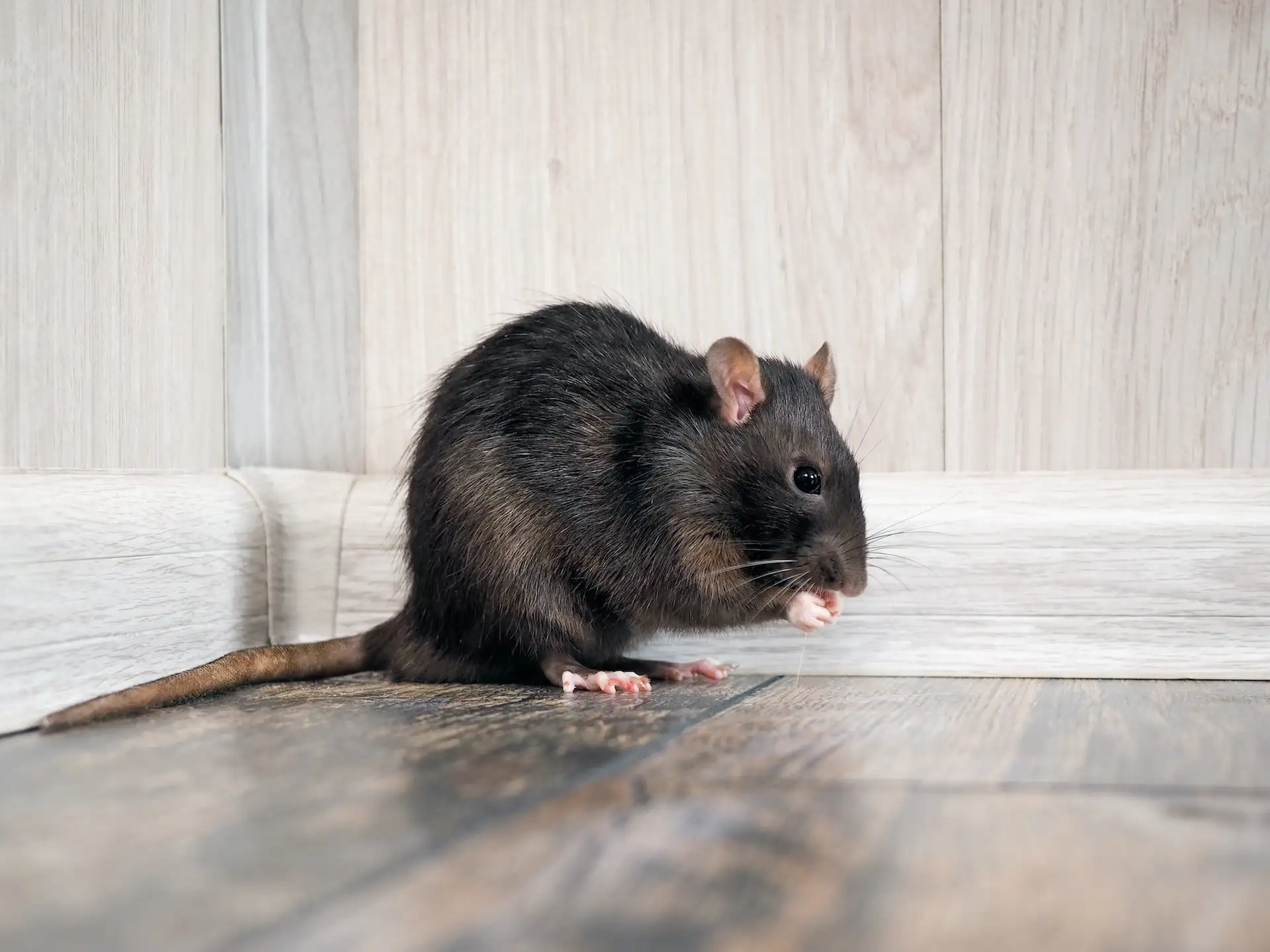
Rodent control (deratization) means eliminating rodents – rats and mice. As constant companions of humans, they are widespread and cause major economic and health damage, since they carry many infectious diseases. That is why rodent control is recommended twice a year (in spring and autumn), when rodent activity peaks due to favourable climate conditions. Alongside preventive rodent control there is also chemical rodent control, and additional curative measures are used to deal with sudden increases in rodent populations.
Preventive rodent control
It is both recommended and a legal obligation to carry out preventive rodent control twice a year: in spring, after winter hibernation, when rodents roam in search of food to replenish their reserves, and when increased rainfall and rising groundwater from melting snow flood underground channels and nests; and in autumn, when rodents start gathering food and eating more to build up fat reserves to survive the cold and overwinter with their offspring. It is also carried out as an emergency and anti-epidemic measure when rodent populations surge or after natural disasters.Certain preventive measures can be taken to stop rodents from multiplying in a given environment. One of the most basic is constructing buildings from solid materials. In areas with a sewage system, openings must be secured with grates to prevent rodents from entering buildings where people live. Rats are known to be unable to survive long without water, even when there is enough food, which is why proper maintenance of plumbing is important.
Keeping stables, yards and food storage areas clean and hygienic is also one of the preventive measures.
Harmful rodent populations are controlled and reduced by biological, mechanical or chemical measures.
Types of rodent control: preventive and systematic.
All legal entities are required to carry it out twice (2) a year.
Our approach: Assessment, Implementation and Control (AIC).
It is important to stress that successful pest control is a process, not a one-off event. Through our integrated pest management programme, Eko-tim d.o.o. creates a protection plan tailored to your needs and wishes, based both on scientific knowledge and on individual inspections of your premises.
Our methods combine continuous, alternating assessment, implementation and control, so you can be sure your business gets maximum protection with minimal exposure.
Public spaces and pest control products: alongside preventive rodent control, additional curative measures deal with an increase in harmful rodents the moment it occurs. In addition to preventive (e.g. waste removal), biological (natural predators) and physical-mechanical (barriers, glue traps) methods, the most widely used method of rodent control is still the chemical method, based on chemical agents called rodenticides. By chemical composition, rodenticides are poisons of mineral, plant or synthetic origin, and by mode of action they fall into the following groups: • acute poisons – highly toxic, fast-acting • anticoagulants – cumulative effect, prolonged action • chemosterilants – selective effect • gases – inhaled, fast-acting
Rodenticides must be effective in low concentrations, cause death in rodents that is as close to natural as possible, be palatable to rodents and not cause resistance. Furthermore, at the applied concentration rodenticides must not be toxic to people and domestic animals, and must be approved by the competent Ministry of Health. Second-generation anticoagulant rodenticides have all of these properties, and we use them in the form of ready-made loose or solid baits when providing rodent control. A bait is a mixture of a rodenticide and food as a carrier. Depending on the composition of the food carrier, there are several types of bait: fresh or perishable food bait, grain bait (loose bait), paraffin (solid) bait, liquid bait and tracking powder. Carefully selected bait, depending on site conditions, is placed in bait stations with clear warning labels and the details of the company providing the service. Besides choosing an attractive bait, effective rodent control requires assessing the site before any work and identifying the critical spots for the bait stations. That is why an exact plan and layout of bait placement (a so-called bait map) must be drawn up for every building and site, based on where rodents are most active, their routes and resting places, and their hiding places and burrows.
Request a quote.
Call us or send an email – we reply quickly.


Need pest control?
Get in touch – we'll assess your premises and propose a solution tailored to your needs.